AAC Batching System & Raw Material Preparation
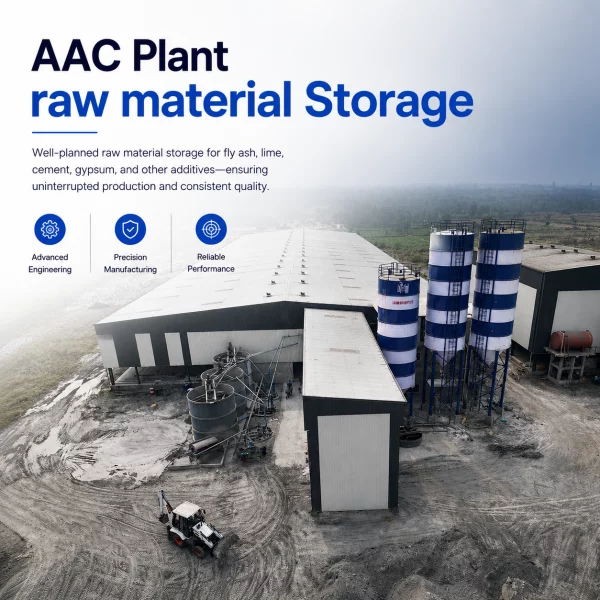
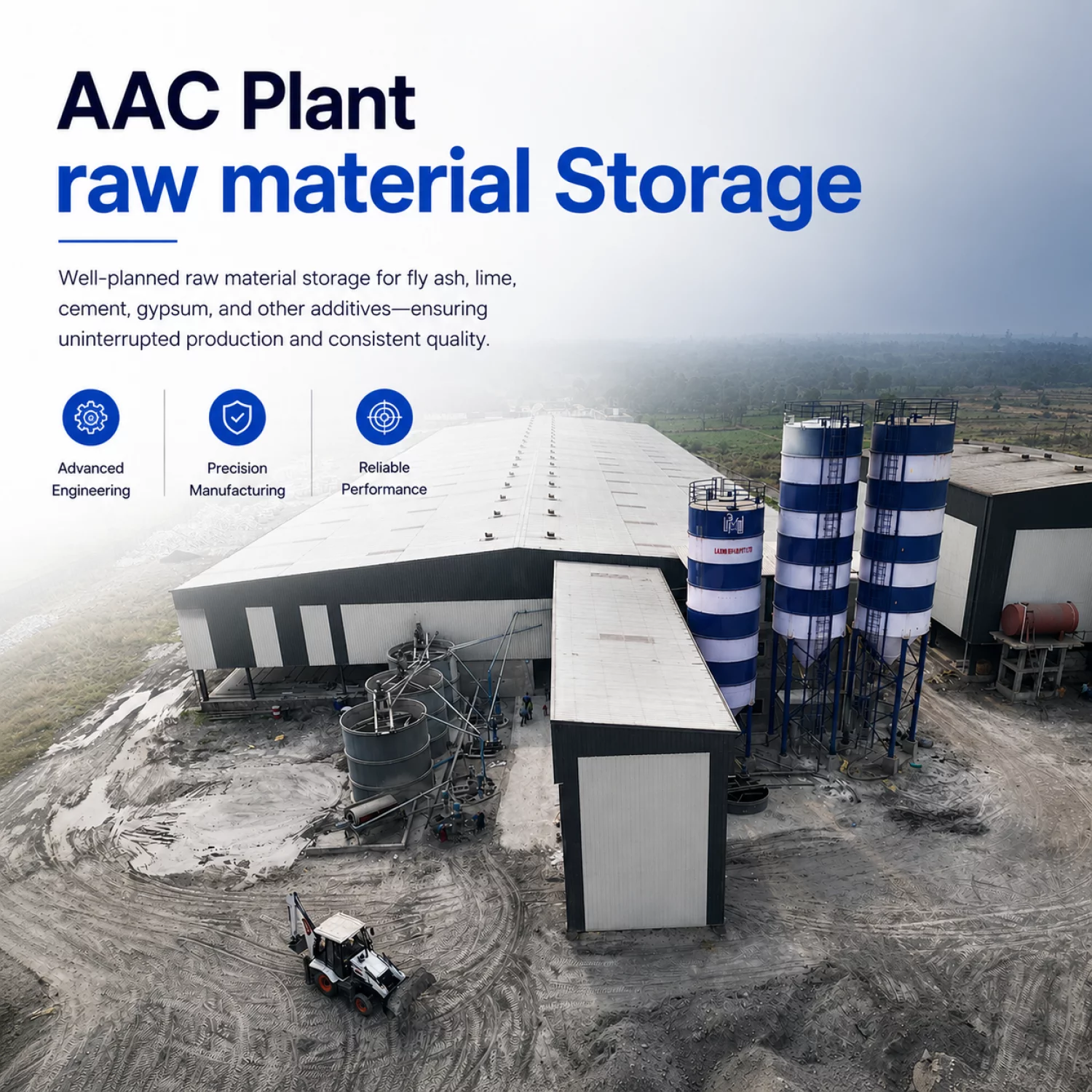
AAC Batching System & Raw Material Preparation Details
Block quality isn't decided at the autoclave or cutting line — it starts at the batching stage. Before any material enters the mould, it has to be prepared, measured, and mixed to an exact recipe. Here's how the process works, and what to look for when evaluating a batching system.
Raw Material Preparation: It Starts With Your Siliceous Material
The major raw materials in AAC production are fly ash or sand, cement, lime, gypsum, aluminium powder, water, and process additives — but the siliceous material (fly ash, pond ash, or sand) needs specific preparation before it's ready for slurry.
Dry fly ash is transferred straight from storage to slurry preparation using a screw conveyor — a controlled, enclosed method that reduces material handling losses.
Pond ash / bottom ash is handled in bulk and moved with a loader instead, since it isn't suited to pneumatic conveying. Its suitability depends on particle size, moisture content, and compatibility with your formulation.
Sand must first be ground to the required fineness, since raw sand contains particles too large for direct slurry use: Sand → Grinding → Fine Sand → Slurry Preparation.
Slurry Preparation, Screening & Density Control
Once the siliceous material reaches the slurry section, it's mixed with water to form a primary slurry — but this slurry can carry oversize particles or foreign matter, so it passes through a screener to protect downstream equipment and keep the mix uniform.
Density control is the critical checkpoint. Slurry density determines how much solid material actually enters each batch — even if slurry volume stays constant, varying density changes the real quantity of fly ash or sand going in. Getting this right supports:
Consistent raw material proportion and stable batch composition
Better pore structure and more consistent block density
Improved strength consistency and dimensional stability
Less variation between batches
Only after the slurry hits the required density is it moved to the slurry storage tank for batching.
The Automatic Batching System
The batching system's job is to measure and deliver the exact quantity of each raw material at the correct stage — not just dump materials into a mixer. In an automatic system, slurry, cement, and lime are measured and supplied according to a predefined recipe, minimizing the variation that comes with manual measurement. Where automatic dosing is fitted, gypsum and aluminium are included too, improving dosing accuracy, repeatability, and operator control.
Typical batching sequence: Slurry + Cement + Lime + Gypsum → Controlled Mixing → Aluminium Dosing → Final Mixing → Mould Filling
Why Aluminium Dosing Timing Matters
Aluminium is the gas-forming agent that creates AAC's cellular structure — and it's not added at the start of mixing. The other materials are mixed first; only 12–20 seconds before discharge does the automatic dosing valve introduce aluminium, which is then mixed for that final short period before the batch discharges into the mould box.
Full sequence: Raw Material Batching → Initial Mixing → Automatic Aluminium Dosing → Final Mixing (12–20 sec) → Mixer Discharge → Mould Filling → Pre-Curing
This timing directly affects how well the gas-generation reaction develops — get it wrong and pore structure suffers.
A Note on Fly Ash Carbon Content
Depending on the carbon content and characteristics of the fly ash used, some formulations need soluble oil or another process additive to counter carbon-related effects. This is why a batching system shouldn't rely on a fixed, generic recipe — raw material testing and process optimization matter for stable production.
Three Factors That Decide Batching Quality
Slurry density — directly affects batch composition, and therefore block density and strength.
Mixing efficiency — determines how uniformly slurry, cement, lime, and gypsum distribute through the batch.
Raw material quantity — even small dosing variations in key ingredients affect final block properties, which is why accurate weighing and automated control matter.
Process Flow at a Glance
Siliceous Material
Preparation Step
Then →
Dry Fly Ash
Screw Conveyor
Slurry Prep → Screening → Density Check → Storage → Batching → Mixer → Aluminium Dosing → Final Mixing → Mould Filling
Pond Ash / Bottom Ash
Loader
Same as above
Sand
Sand Grinding
Same as above
What a Properly Engineered Batching System Delivers
Consistent batch composition and accurate raw material dosing
Stable slurry density and better mixing uniformity
Controlled aluminium dosing and consistent pore formation
Reduced batch-to-batch variation and better density control
Less dependence on manual intervention
Because of this, the batching system should be designed together with raw material preparation, slurry preparation, mixing, and overall plant automation — not as a standalone unit.
Related Products
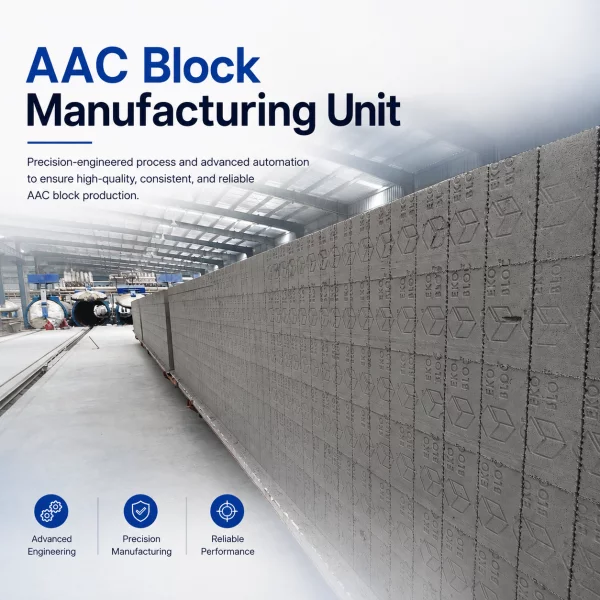
AAC Block Manufacturing Unit
Looking to set up an AAC (Autoclaved Aerated Concrete) block plant? Before choosing a supplier, it's important to unders... Continue
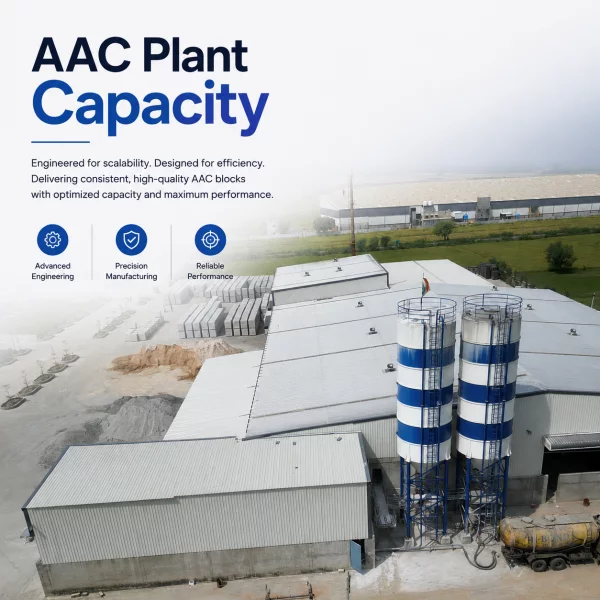
AAC Plant Capacity
AAC plant capacity depends on the complete production system, not simply on the number of autoclaves. At Laxmi En-Fab, p... Continue
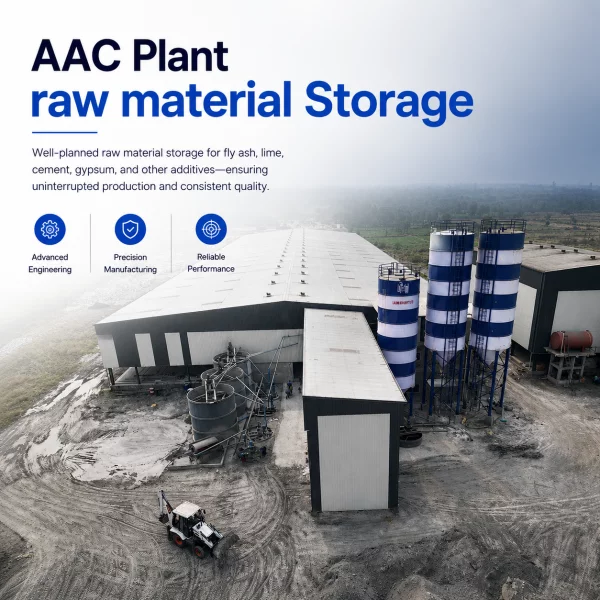
AAC Plant Raw Material Storage
AAC Plant Raw Material Storage: Silo & Stockyard Systems ExplainedRaw material storage isn't just about keeping st... Continue
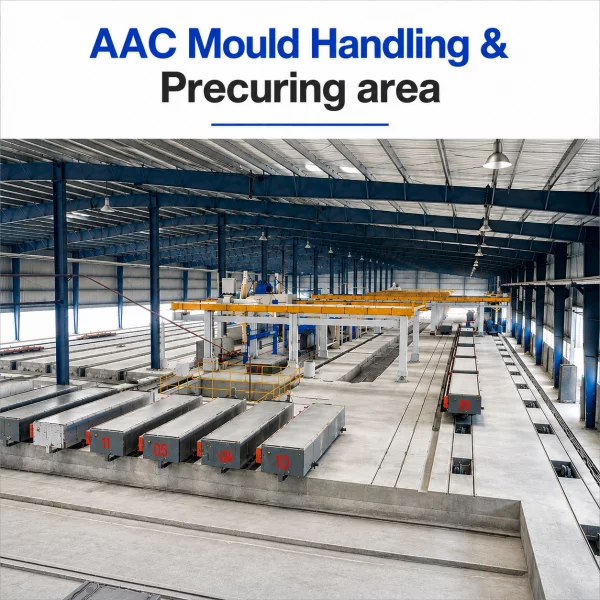
AAC Mould Handling & Precuring
After slurry is poured, the mould still has a long journey before it becomes a finished block — and how well that ... Continue

AAC Tilting Machine
The Small Operation With a Big Impact on Cake QualityBetween precuring and wire cutting sits one of the most technical... Continue