AAC Plant Raw Material Storage
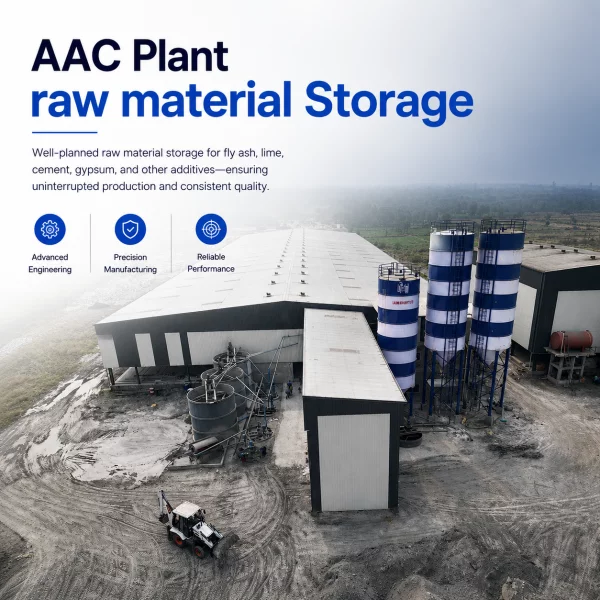
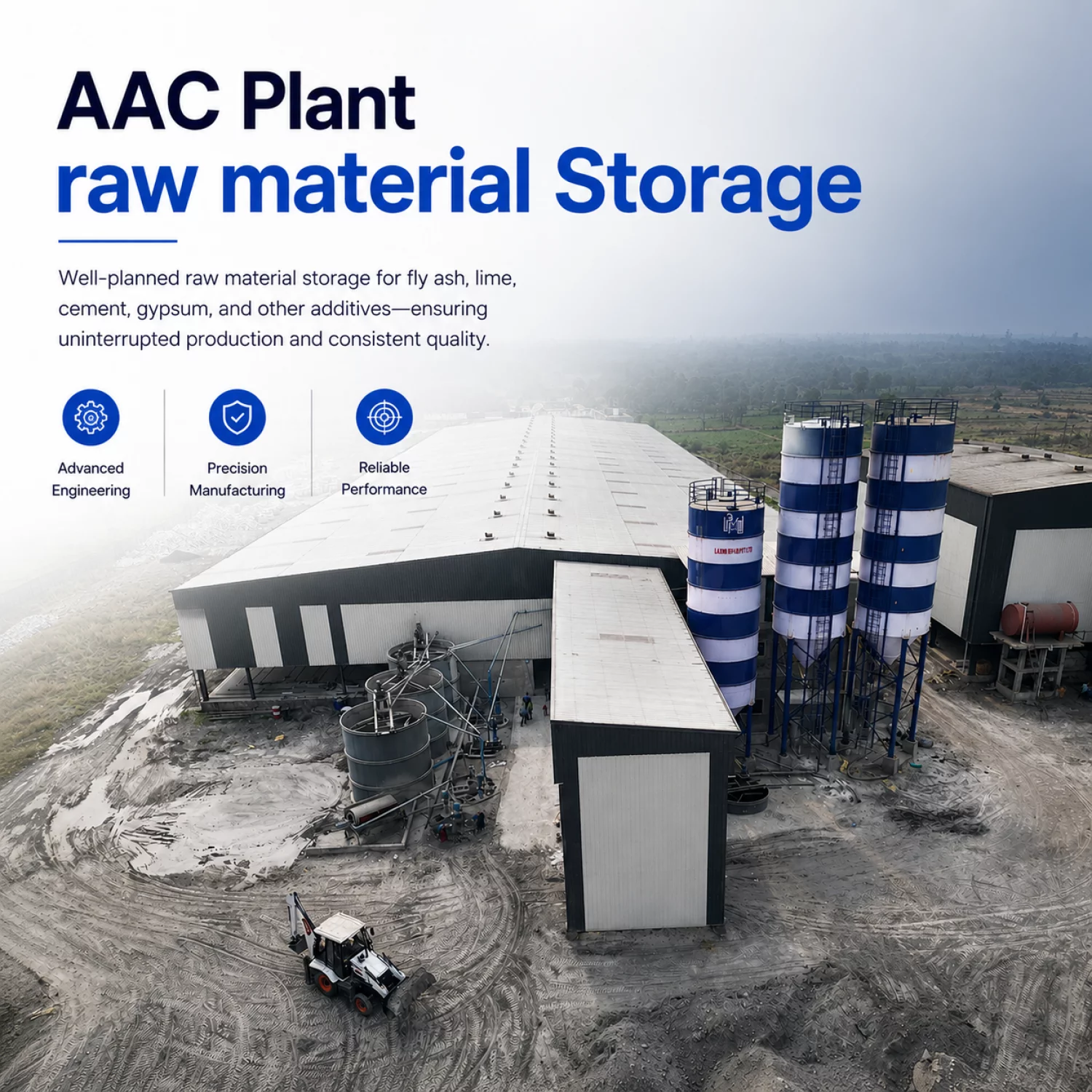
AAC Plant Raw Material Storage Details
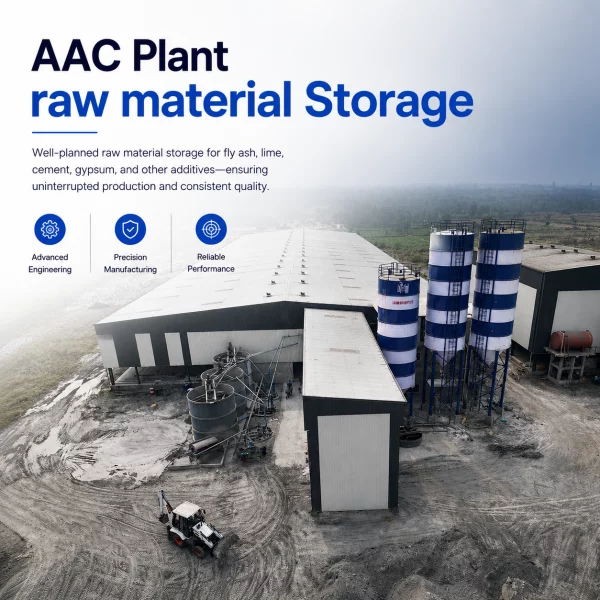
AAC Plant Raw Material Storage: Silo & Stockyard Systems Explained
Raw material storage isn't just about keeping stock on-site — it directly affects your plant's material handling losses, production continuity, and dust control. Here's how each AAC raw material is typically stored, transferred, and sized, so you know what to plan for before construction.
Which Materials Need Which Storage?
AAC plants handle a mix of dry bulk materials (fly ash, cement, lime, gypsum), bulk silica materials (pond ash or sand), aluminium powder, and boiler fuel. The right storage method depends on the material's physical form, quantity, supply method, and your plant's future expansion plans:
Raw Material
Typical Supply
Storage Method
Transfer Method
Fly Ash
Bulker
Silo
Roots blower
Cement
Bulker (or bags)
Silo
Roots blower / stationary bulker
Lime
~1 Ton bags
Silo
Stationary bulker + Roots blower
Gypsum
Bags
Manual storage / Silo
Manual or automatic
Aluminium Powder
Bags
Controlled storage
Slurry preparation/dosing
Pond Ash
Bulk
Open stockyard
Loader
Sand
Bulk
Open stockyard
Loader
Boiler Fuel
Bulk
Boiler shed / Hopper
Fuel feeding system
Silo Storage for Fly Ash, Cement & Lime
High-volume dry materials are best kept in dedicated silos, which give you better material protection, controlled feeding, less dust, less manual handling, and clean integration with automatic batching.
Fly ash: delivered by bulker → transferred via Roots blower and pneumatic pipeline → into the fly ash silo → feeding/batching system.
Cement: delivered by bulker → Roots blower → pneumatic line → cement silo → batching. Where bulker supply isn't available locally, cement can be unloaded into a stationary transfer bulker and then conveyed pneumatically, similar to the lime system below.
Lime: usually arrives in ~1-ton bags rather than bulkers. Since handling bags manually isn't efficient at volume, bags are lifted by overhead crane into a stationary bulker, then conveyed via Roots blower into the lime silo.
Plan silo capacity for your future output, not just today's. Expanding or modifying silos later involves civil foundation work, structural changes, new piping, and installation downtime — all avoidable if future capacity is factored in from the start.
Pond Ash & Sand: Open Stockyard Storage
Where dry fly ash isn't commercially viable, plants use pond ash (bottom ash) or sand as the silica-rich material instead. These are stored in an open stockyard and moved to slurry preparation using a tractor or wheel loader.
Stockyard sizing should account for daily consumption, delivery frequency, required inventory, production capacity, future expansion, vehicle movement, and drainage. If dusting becomes an issue, options include shed/covered storage or controlled water sprinkling — engineered carefully so dust control doesn't create handling problems from excess moisture.
Gypsum & Aluminium Powder: Smaller Volumes, Special Handling
Gypsum is used in smaller quantities, so many plants store and dose it manually. In higher-capacity plants, a dedicated gypsum silo with automatic feeding reduces manual handling and improves batching accuracy and consistency.
Aluminium powder, used as the expansion agent, is flammable and needs careful handling — it shouldn't be treated like a standard bulk powder. In automated plants, it's integrated into the primary slurry preparation system: aluminium powder is dosed and mixed with chilled water to form aluminium slurry before entering production, improving dosing accuracy and control.
Boiler Fuel Storage
Storage depends on fuel type, consumption rate, and boiler capacity. Normal-capacity plants typically use a boiler shed/storage area; higher-capacity plants benefit from a dedicated fuel storage hopper for a more controlled, less manual fuel supply to the boiler.
How to Size Your Storage Capacity
Storage capacity shouldn't be calculated from current production alone. Key factors to evaluate:
Plant production capacity – daily block output drives raw material consumption
Raw material consumption – mix design determines how much of each material you need
Supply frequency – frequent deliveries need less inventory; infrequent deliveries need more
Transportation availability – bulkers, trucks, bagged material, and local logistics
Future expansion – silo foundations should account for future capacity, not just current needs
Site conditions – land availability, layout, vehicle movement, and civil requirements
The Full Material Flow
A well-integrated system moves materials through:
Raw Material Receiving → Bulk/Bag Unloading → Silo/Stockyard Storage → Pneumatic Conveying/Loader Handling → Raw Material Preparation → Batching → Slurry Preparation → AAC Production
The right configuration depends on your plant capacity, raw material availability, mix design, automation level, site conditions, and expansion plans.
Plan Storage Before You Build
Silo foundations, silo placement, pneumatic pipelines, stockyard areas, crane arra
Related Products
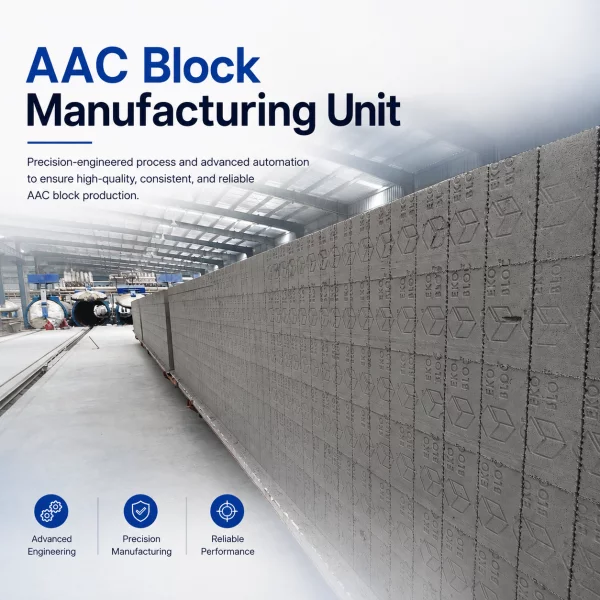
AAC Block Manufacturing Unit
Looking to set up an AAC (Autoclaved Aerated Concrete) block plant? Before choosing a supplier, it's important to unders... Continue
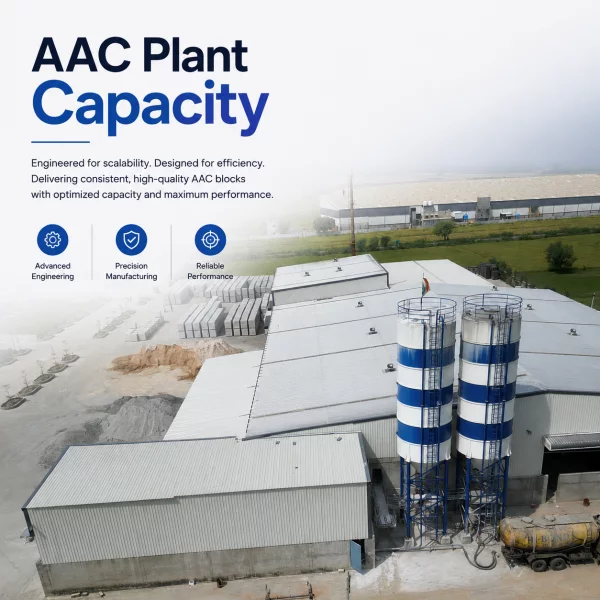
AAC Plant Capacity
AAC plant capacity depends on the complete production system, not simply on the number of autoclaves. At Laxmi En-Fab, p... Continue
AAC Batching System & Raw Material Preparation
Block quality isn't decided at the autoclave or cutting line — it starts at the batching stage. Before any materia... Continue
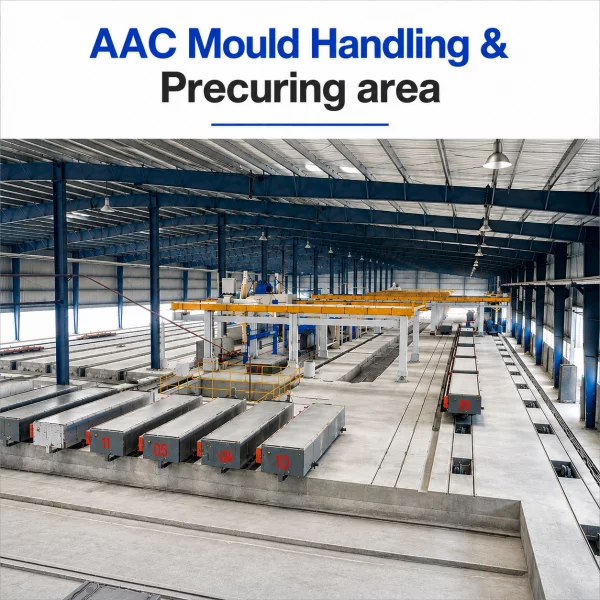
AAC Mould Handling & Precuring
After slurry is poured, the mould still has a long journey before it becomes a finished block — and how well that ... Continue
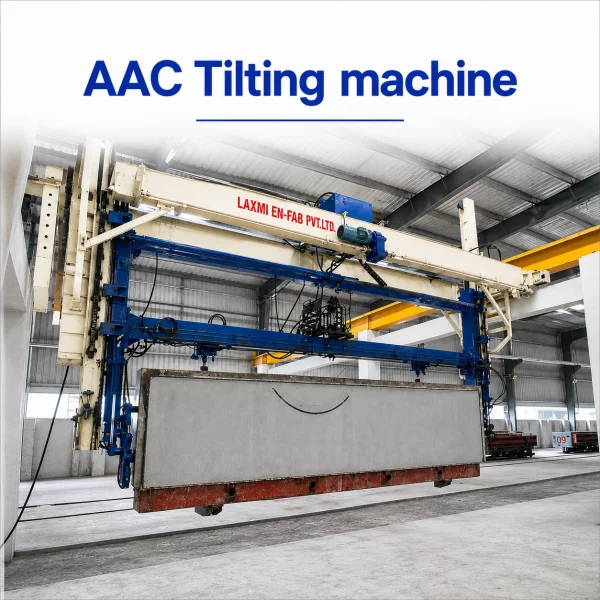
AAC Tilting Machine
The Small Operation With a Big Impact on Cake QualityBetween precuring and wire cutting sits one of the most technical... Continue