AAC Tilting Machine
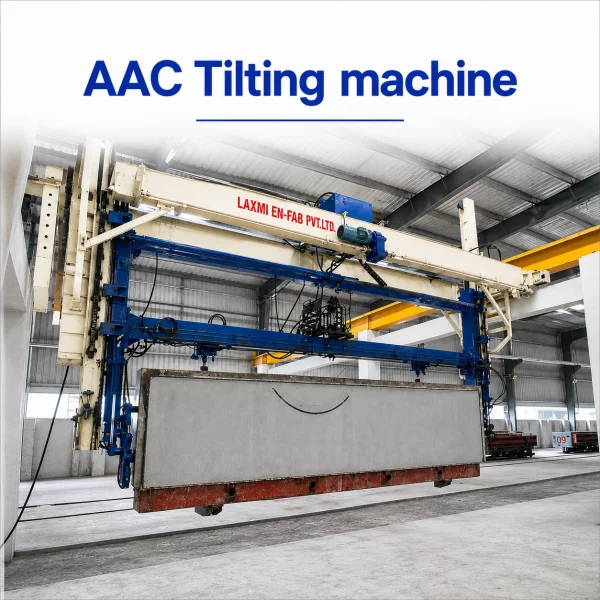
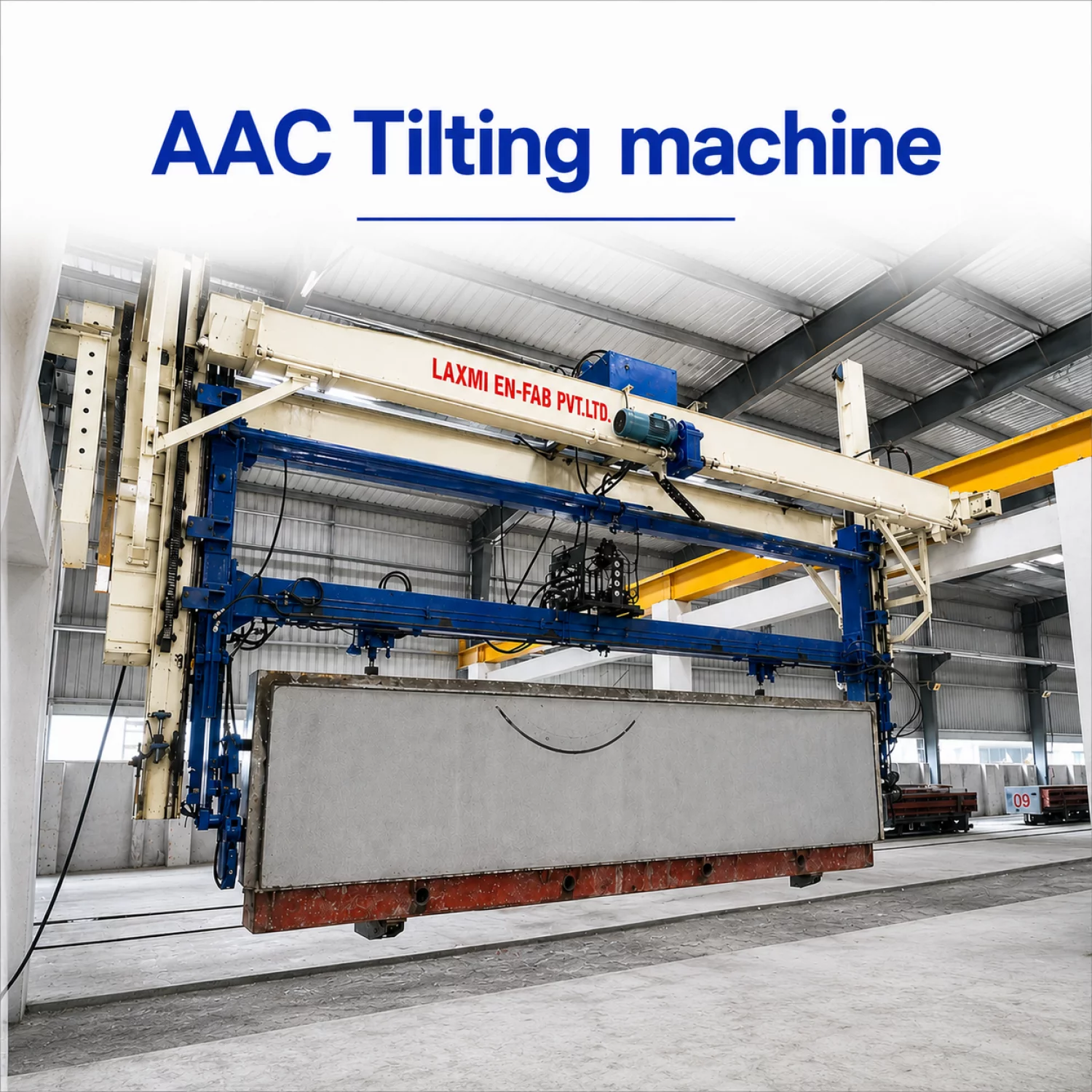
AAC Tilting Machine Details
The Small Operation With a Big Impact on Cake Quality
Between precuring and wire cutting sits one of the most technically sensitive steps in AAC manufacturing — tilting the mould, separating it from the green cake, and preparing that cake for cutting. Get this wrong and you lose material, not just time. Here's what the process involves and what to evaluate before choosing a tilting machine.
What Does an AAC Tilting Machine Actually Do?
Also called a tilting crane or mould tilting system, this machine takes over once precuring is complete — typically after 2–3 hours, depending on mix design, temperature, and raw material characteristics — and the green cake is hard enough to handle. It then runs a precise sequence:
Picks up the mould from the precuring station
Tilts the mould approximately 90 degrees
Unlocks and releases the side plate
Gently separates the mould from the partially cured cake
Locks the cake with a supporting plate
Tilts the cake back to an upright position
Returns the empty mould to the mould return station
Every one of these movements needs to be smooth and synchronized — the cake has enough hardness to be handled, but not enough to withstand mechanical shock.
Why This Isn't Just a Lifting Operation
A standard crane or lifting system isn't built for this job. The mechanism has to control lifting movement, tilting speed, acceleration and deceleration, side-plate unlocking, cake separation, plate locking, cake support, and return movement — all in one controlled sequence. Get any part of it wrong and you risk cracks, broken corners, deformation, or surface damage.
Even a small jerk at this stage can cause:
Cracks, broken corners, or edges
Cake deformation and surface damage
Cutting problems and increased rejection
Material wastage and production downtime — in severe cases, an entire cast becomes unusable
This is why tilting equipment should be evaluated as a precision process machine, not a generic lifting crane.
What a Breakdown Actually Costs You
Tilting machine reliability matters more than it might seem, because a mould with a partially cured cake can't sit indefinitely — the cake keeps hardening. If a breakdown causes a prolonged stoppage, cakes waiting in queue can become too hard to cut properly. With multiple moulds backed up, that can mean entire casts written off as wastage. This is why preventive maintenance isn't optional — it's production risk management.
Components that need regular inspection: lifting and tilting mechanisms, gearboxes and drives, bearings, chains/transmission components, braking system, limit switches, sensors, locking mechanisms, side plate handling, structural components, electrical controls, safety interlocks, and lubrication points. Catching wear, noise, or vibration early prevents major breakdowns later.
What a Well-Designed Tilting System Delivers
Better green cake protection — controlled movement reduces cracks and deformation
Consistent handling — repeatable movement supports a stable production cycle
Reduced material wastage — less rejection means less lost raw material
Higher equipment availability — robust construction plus preventive maintenance means fewer unexpected breakdowns
Better production continuity — the cutting section receives cakes reliably
Improved overall plant reliability — tilting is the link between precuring, mould handling, and wire cutting, so its performance affects everything downstream
What to Check Before Choosing a Tilting Machine
Look beyond lifting capacity and basic specs. Ask:
How smoothly does the machine actually operate?
How is the green cake protected during tilting?
How reliable is the mould locking system?
How quickly can it recover from a fault?
Is preventive maintenance practical to carry out?
How proven is the technology across real operating plants?
Does the manufacturer understand the full AAC production process, not just this one machine?
Related Products
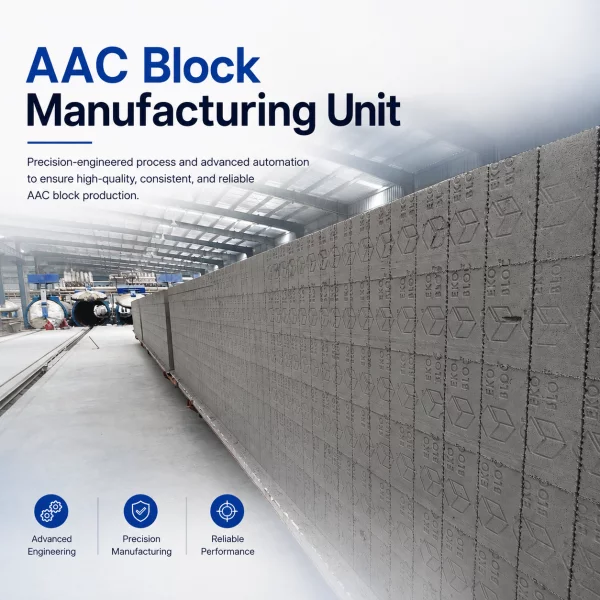
AAC Block Manufacturing Unit
Looking to set up an AAC (Autoclaved Aerated Concrete) block plant? Before choosing a supplier, it's important to unders... Continue
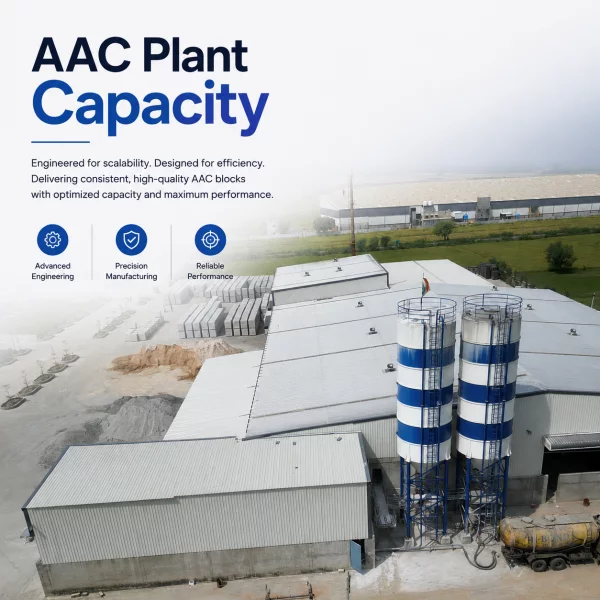
AAC Plant Capacity
AAC plant capacity depends on the complete production system, not simply on the number of autoclaves. At Laxmi En-Fab, p... Continue
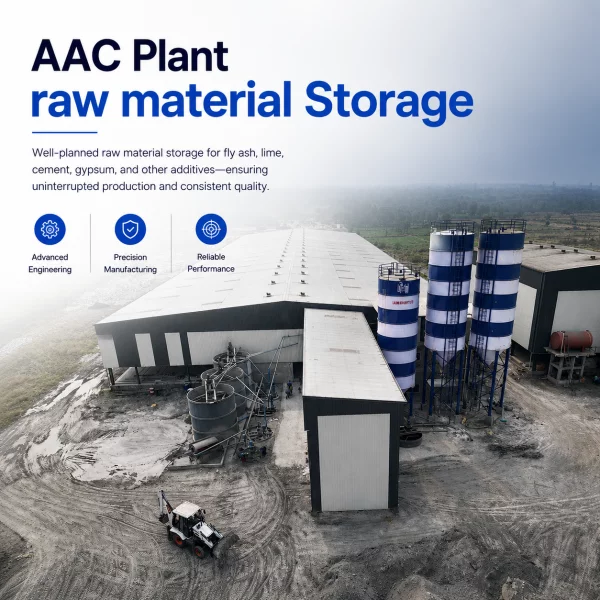
AAC Plant Raw Material Storage
AAC Plant Raw Material Storage: Silo & Stockyard Systems ExplainedRaw material storage isn't just about keeping st... Continue
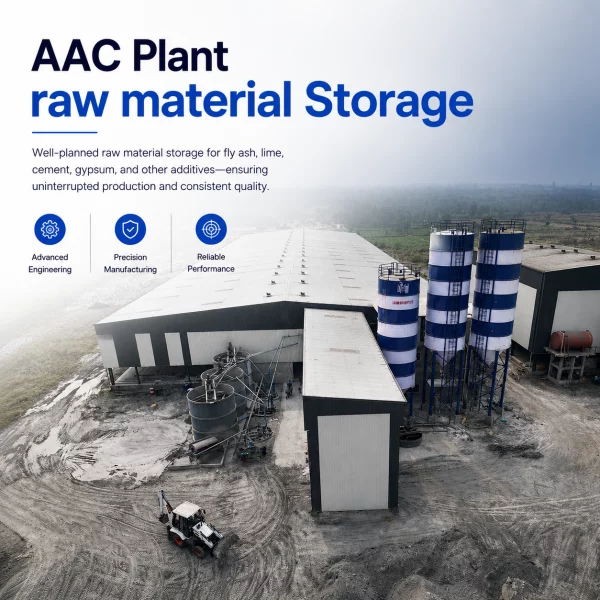
AAC Batching System & Raw Material Preparation
Block quality isn't decided at the autoclave or cutting line — it starts at the batching stage. Before any materia... Continue
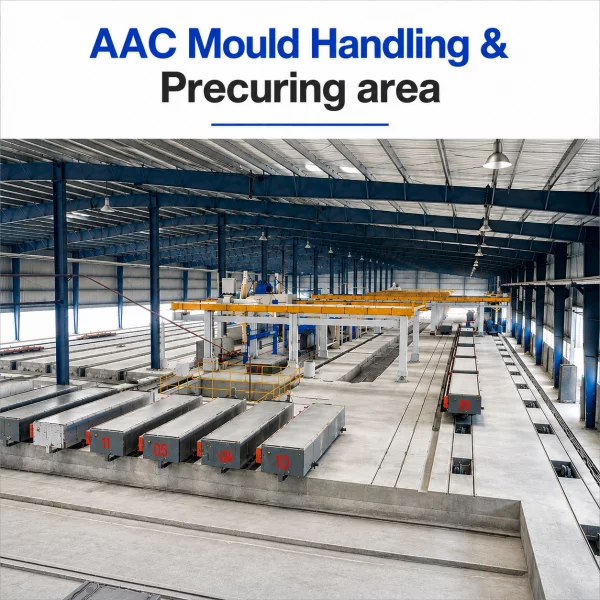
AAC Mould Handling & Precuring
After slurry is poured, the mould still has a long journey before it becomes a finished block — and how well that ... Continue